I build things in production. Then I help others do the same.
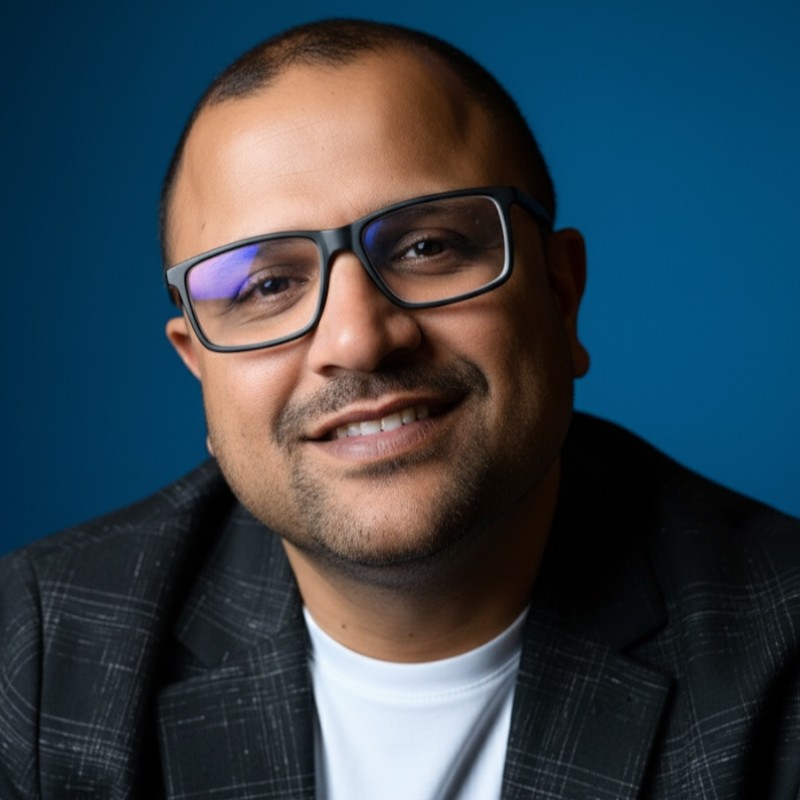
Twenty years at the intersection of operations, engineering, and AI. Most AI work optimizes one lane. The interesting failures happen in the seams between them — and that’s where AI transformation actually lives.
Ten years scaling operations at Alphabet. The day-to-day: breaking cross-functional barriers, defining scope across teams that wouldn’t align, holding accountability when nobody wanted to own the gap, untangling workflows trapped by legacy dependencies. Sixty to seventy percent of the work was change management. The technology was the part everyone agreed on.
Then four years on the GTM side at AI technology providers — watching how enterprises actually buy and deploy AI. The pattern that kept repeating: clients aren’t shopping for tools. They’re shopping for a radar. Someone who’s been through the patterns, can separate signal from hype, and can guide the journey. The best buyers know they need a guide more than they need another vendor.
AI transformation usually needs four people: an operator who’s run things, an architect who designs systems, a builder who ships them, and a change-management partner who makes them stick. Most consultants are one of these. I bring all four to the same engagement.
I help build that muscle in two directions. Top-down: mindset, governance, executive alignment, the courage to retire what isn’t working. Bottom-up: workflows, adoption, the operational loops that make new behaviors stick.
Two outcomes show up on the P&L:
→ Cost of services trending down.
→ User adoption trending up.
Everything I do for clients — orchestration design, operational loops — is in service of those two numbers.
Colophon · Built solo, paired with a stack of AI tools — pair programmer, research assistant, code reviewer. The same arrangement is the AI-as-coworker pattern I help clients adopt.